


How FX Hedging Helps Protect the Dollar’s Dominance

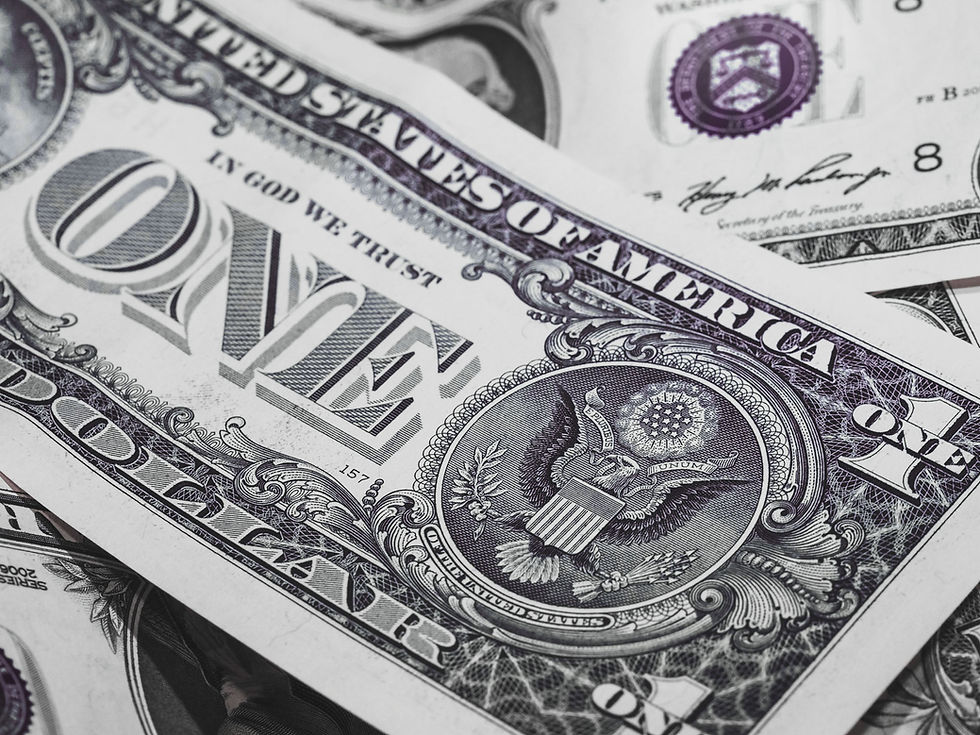
Takeaway: This study investigates how the cost of foreign exchange (FX) financial derivatives influences exporters’ choice of invoicing currency, demonstrating how cheap derivative markets help maintain US dollar dominance and alter how currency fluctuations affect international prices.
Key Points
Financial Hedging Promotes Foreign Pricing: Companies that use FX derivative contracts to lock in exchange rates are far more likely to invoice their exports in foreign currencies—especially the US dollar—rather than their home currency.
Higher Hedging Costs Push Firms Home: When financial distress unexpectedly increases the cost of underwriting FX derivatives, firms cut back on both dollar and local-currency pricing, returning to home-currency pricing. Smaller firms are hit hardest by these cost spikes.
Hedging Mutes Price Adjustments: Financial hedging weakens the sensitivity of export prices to exchange-rate swings, helping explain the "exchange-rate disconnect puzzle"—why exchange rate movements do not always pass through quickly to consumer prices.
Imagine a French winemaker selling Champagne to Brazil. Should the bottle be priced in euros, Brazilian reals, or US dollars?
If priced in reals or dollars, a sudden drop in those currencies before payment arrives could wipe out the winemaker's profit margin. To protect against this risk, many exporters turn to financial markets, using foreign exchange (FX) derivative contracts (like forward contracts) to lock in exchange rates in advance.
This decision shapes everyday life around the globe. How businesses price foreign goods affects the stability of prices for imported items, how inflation moves across borders, and how central bank interest rate choices impact foreign markets.
When financial markets make dollar-based derivative contracts significantly cheaper and easier to trade than local-currency contracts, exporters are incentivized to price in US dollars, even when neither the seller nor the buyer is American.
Research
Researchers Martina Fraschini, Thibaut Piquard, and Tammaro Terracciano set out to test whether the cost of financial hedging directly drives currency choices in international trade.
To answer this, they constructed a theoretical model linking firm financing, hedging costs, and pricing strategy. They then tested the model using a comprehensive dataset of French customs declarations from 2011 to 2017, combined with firm-level regulatory data on financial derivative transactions.
To isolate cause and effect, the authors evaluated how firms altered their export currencies during the 2011 European sovereign debt crisis—an event that created a temporary dollar funding shortage and abruptly raised the cost of dollar-hedging contracts—as well as during the 2015 Swiss franc appreciation.
Findings
The researchers found that firms using FX derivatives are twice as likely to price their exports in foreign currencies compared to non-hedging firms. In particular, hedging exporters heavily favor the US dollar over local buyer currencies. Because dollar derivative markets are uniquely deep and cheap, they allow exporters to customize prices for local markets while keeping currency risk low.
However, when hedging costs unexpectedly spiked during the 2011 crisis, hedging exporters adjusted their strategy. Faced with higher fees to lock in forward rates, companies reduced their use of both dollar and local currency pricing, shifting back to the safety of their home currency (the euro). Smaller businesses responded most aggressively because fixed financial costs represent a larger share of their revenues, leaving them closer to the financial edge where foreign currency pricing ceases to be profitable.
The study also demonstrates that hedging creates "stickier" international prices. Because hedging exporters are insulated from exchange-rate movements in the short run, they alter their export prices significantly less than non-hedging firms when exchange rates swing.
Limitations and Context
The empirical findings draw on data from French exporters. France is an advanced economy operating within the Eurozone, meaning these firms had access to the euro—the world's second-largest reserve currency—as a viable alternative. While this provides a clean baseline to observe when and why firms abandon home-currency pricing, response patterns might differ for exporters in emerging markets that lack a strong home currency.
Why It Matters
If deep and inexpensive financial markets drive currency adoption, efforts by foreign governments to promote alternative international trade currencies (such as the euro or renminbi) cannot rely solely on trade volume. Success requires building cheap, highly liquid derivative markets. Furthermore, these findings offer policymakers a clearer understanding of why exchange rate fluctuations frequently fail to bring about expected shifts in trade prices: widespread corporate hedging acts as a buffer that absorbs exchange rate shocks.
Learn More
Paper Title: FX Hedging, Currency Choice, and Dollar Dominance
Authors: Martina Fraschini, Thibaut Piquard, and Tammaro Terracciano
Journal / Source: Working Paper (Banque de France / IESE Business School / University of Luxembourg)
Publication Year: 2026
URL: https://papers.ssrn.com/sol3/papers.cfm?abstract_id=7147318
Econ Today Explains
Economic Concept: Covered Interest Parity (CIP) Deviations
Covered Interest Parity (CIP) is a financial theory stating that interest rate differences between two countries should exactly match the difference between current (spot) and future (forward) exchange rates. In a perfectly efficient financial market, an investor cannot make a risk-free profit by borrowing in one currency, converting it to another, investing it abroad, and locking in a forward contract to convert the money back.
When a "CIP deviation" occurs, this mathematical link breaks down—usually because banks face funding shortages or regulatory balance-sheet constraints. For non-financial businesses, a CIP deviation acts as an extra transaction fee on FX forward contracts. When CIP deviations widen, locking in future exchange rates becomes more expensive, directly raising the cost of corporate financial hedging.
This article was written by AI but reviewed by a real human.


Comments